
Licensed builder · Free quotes
Excavation Contractors in Minnesota
Building pads, gravel drives, grading and trenching, done by our own crew. Get a free quote.
Cannon Falls, the Twin Cities, southern Minnesota and every town within 100 miles
Get a Free Excavation Quote
Free quotes. Fill out the form or call, and we'll get right back to you.
- Free quotes
- Licensed builder
- Our own crew
- 300-mile service area
Fill out the form below to get your free quote 👇
Excavation & Site Prep
Excavation & Site Prep, built by our own crew
Every building project starts in the dirt, and most of the problems that show up later started there too. A pad that was never compacted settles and cracks the slab on top. A site graded flat instead of away from the building sends spring meltwater against the walls. A gravel drive laid over topsoil turns to ruts the first wet April, and a trench dug too shallow leaves a water line that freezes. Whether you are putting up a pole barn, a shop or a house, or you only need a drive, a cleared lot or a trench across the yard, the dirt work decides how it holds up.
Behind Minnesota Barn Builders is Olson Built and Excavating, a licensed builder in Cannon Falls, and the excavating is our own work. We prepare the sites for the pole barns, shops and barndominiums we build, and we take on dirt work by itself for owners within 100 miles: the Twin Cities metro, southern Minnesota from Red Wing and Northfield to Rochester, Mankato and Albert Lea, western Wisconsin and northern Iowa. Land clearing, building pads, footings, basements, gravel drives, grading and utility trenching all come from one crew that knows what the building on top needs.
What's included
What goes into our excavation & site prep
- 01
Building pads
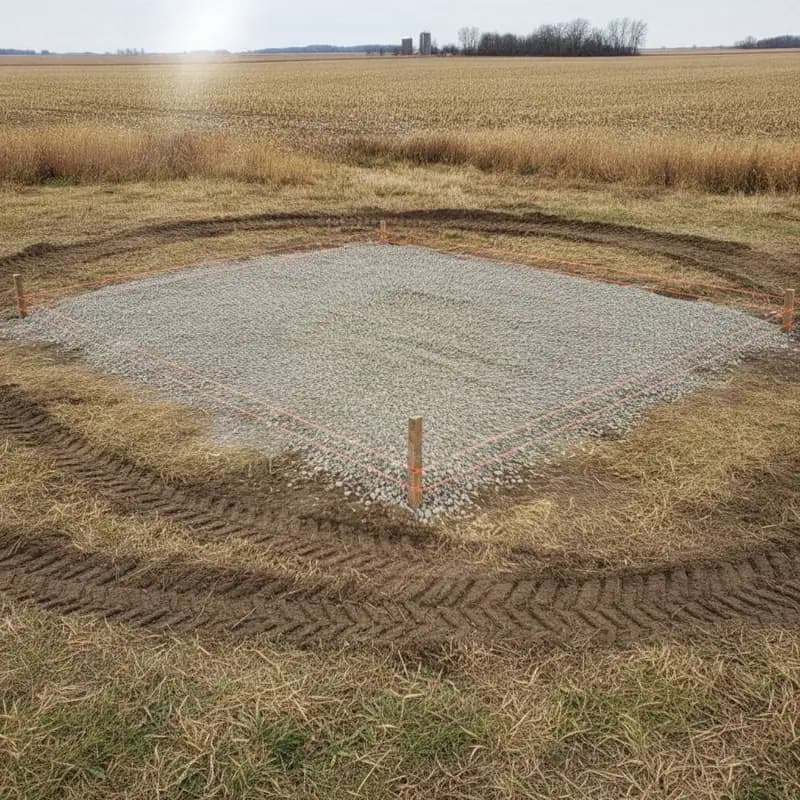
Pads for pole barns, shops, garages and homes, with the topsoil stripped, fill and gravel compacted in lifts, and the top set above the surrounding grade so water drains off.
- 02
Footings and basements
Post holes and footings dug below the frost line, and basement excavations dug to the depth and layout on the plans.
- 03
Gravel driveways
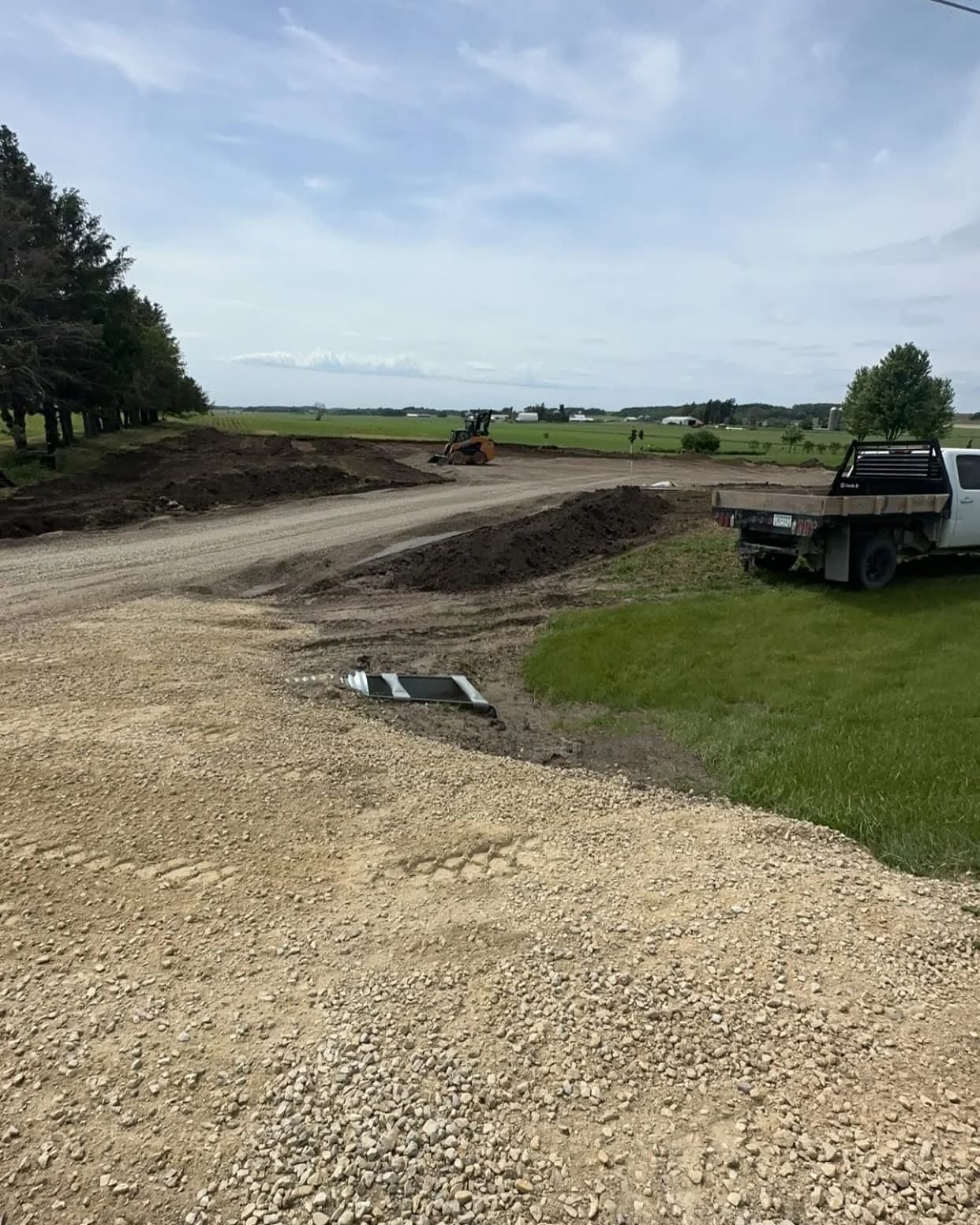
New gravel drives and aprons built on a compacted base with a crowned top and ditches alongside, so they shed water and hold up through spring thaw.
- 04
Grading and drainage
Grading that slopes the ground away from buildings, swales that carry snowmelt and heavy rain around the site, and finish grading after the build.
- 05
Land clearing
Trees, brush and stumps cleared from building sites, drive routes and lots, leaving the ground open and ready for the next step.
- 06
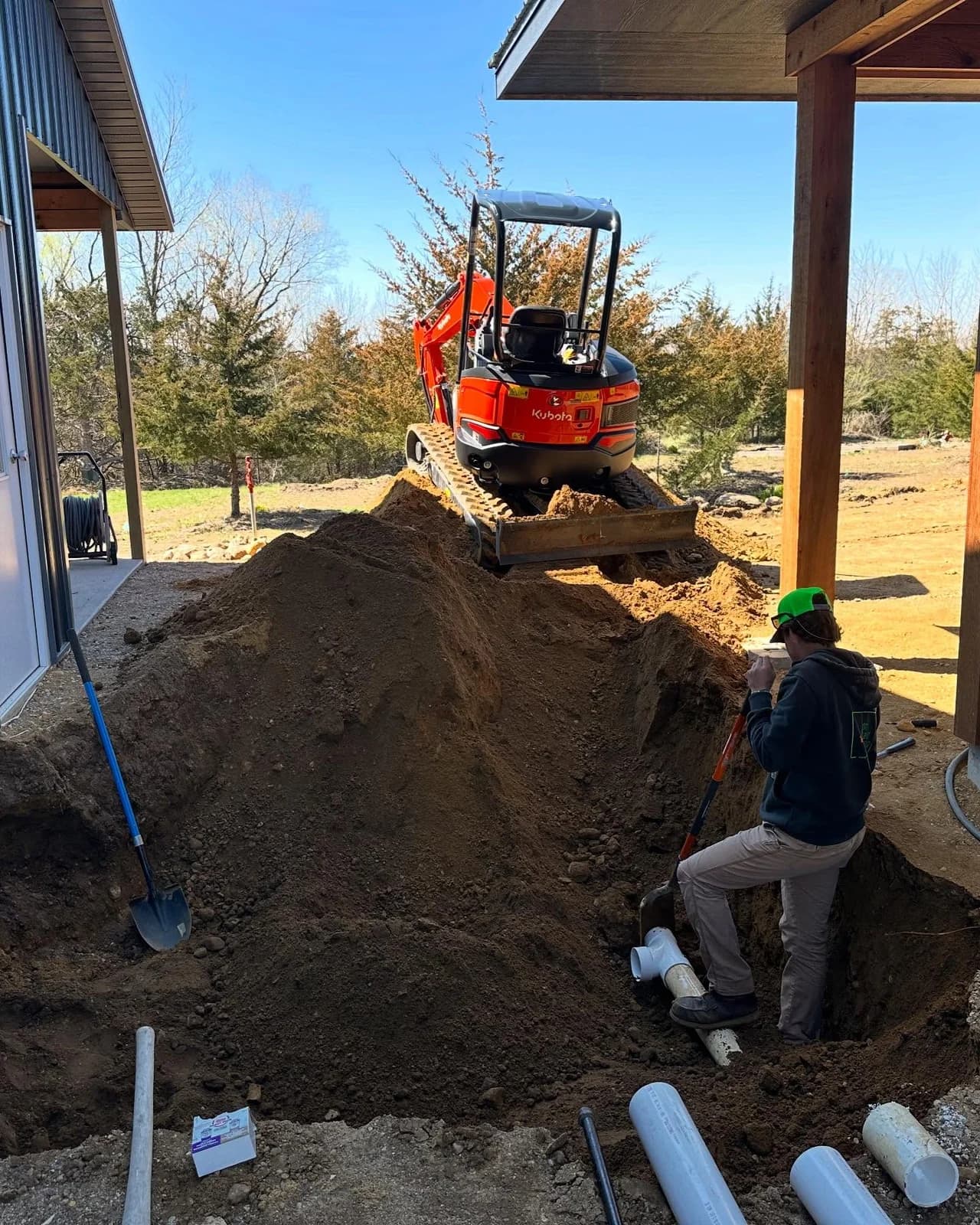
Utility trenching
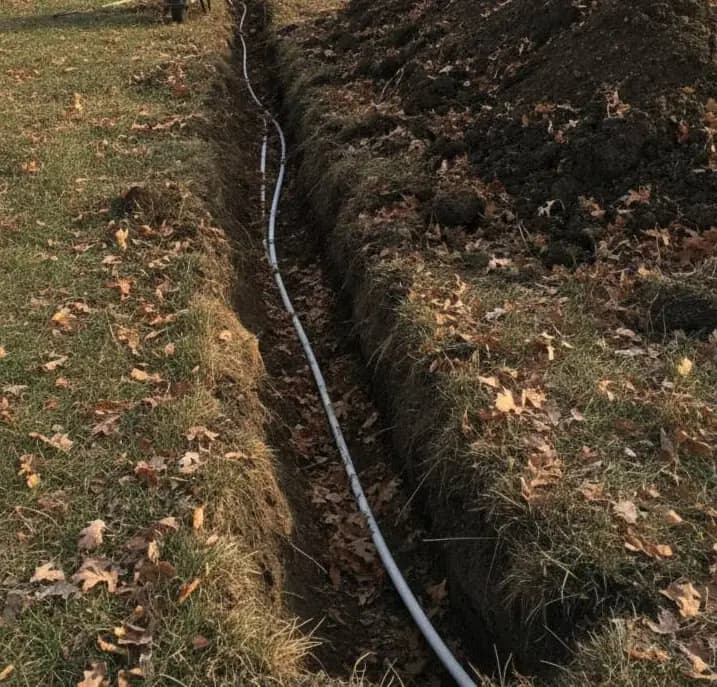
Trenches for water, power and other lines from the house or road to a new building, dug to the depth each line needs, then backfilled and compacted.
Ideas for your project
Excavation & Site Prep: what they can look like
How it works
How an excavation job works
- 1
Free quote and site visit
Tell us what is going on the site or what needs to be dug. We walk the ground, look at soil, slope, trees and access, and give you a free quote.
- 2
Locates, layout and permits
We call in the 811 utility locate, stake out the pad, drive or trench, and confirm any county or township permit the work needs.
- 3
Clear and dig
We clear trees and brush, strip the topsoil, dig footings, basements and trenches, and bring in fill and gravel for pads and drives.
- 4
Compact, grade and finish
We compact pads and drive bases in lifts, backfill trenches, grade the site so water runs away from the building and spread the topsoil back.
Local pages
Excavation & Site Prep by town
Find your town for local details and everything we build there.
- Cannon Falls, MN
- Red Wing, MN
- Northfield, MN
- Zumbrota, MN
- Hastings, MN
- Farmington, MN
- Cottage Grove, MN
- Lakeville, MN
- Faribault, MN
- Eagan, MN
- River Falls, WI
- Woodbury, MN
- Owatonna, MN
- Bloomington, MN
- Prior Lake, MN
- Hudson, WI
- St. Paul, MN
- Shakopee, MN
- Rochester, MN
- Minneapolis, MN
- Stillwater, MN
- Blaine, MN
- Maple Grove, MN
- Forest Lake, MN
- Menomonie, WI
- Austin, MN
- Andover, MN
- Mankato, MN
- Albert Lea, MN
- Otsego, MN
- Winona, MN
- Elk River, MN
- Eau Claire, WI
- La Crosse, WI
- Mason City, IA
- St. Cloud, MN
Also serving Randolph, Miesville, New Trier, Dennison, Hampton, Wanamingo, Goodhue, Nerstrand, Vermillion, Kenyon, Dundas, Empire and more →
Questions
Excavation & Site Prep FAQs
How do Minnesota frost and clay soil affect excavation?
They are the main reason pads, drives and footings fail here. Clay holds water and heaves when it freezes, so footings and posts go below the frost line, and pads and drives are built on compacted granular fill instead of wet clay or topsoil. Grading the site so snowmelt and spring rain run away from the building keeps water out of the pad. We also time the digging around wet spring ground rather than working it into mud.
How much does excavation and site prep cost?
It depends on how much dirt and gravel has to move, so we quote each job for free after a site visit. Pad size, how much topsoil comes off, how much fill and gravel go back, trees and stumps to clear, the length of a drive or trench, soil and slope all change the work. A site far from a gravel source also costs more to supply. When we build the building too, the site work and the build are planned and quoted together.
Do I need a permit for excavation or a new driveway?
Often, for part of the work. A new drive onto a county or township road usually needs an access permit, and the road authority may decide where it goes and whether it needs a culvert. Grading near lakes, rivers and wetlands falls under shoreland and wetland rules, and footings for a building are covered by its building permit. Every dig starts with an 811 locate, and we check what your county and township require before we start.
Do you do excavation without building the building?
Yes. We take on dirt work by itself, like a pad for a garage or home, a new gravel drive, a cleared lot, or a trench to run power or water to a shed. Because we also build pole barns, shops and barndominiums, we prepare ground the way a builder needs it: level, compacted and draining away from where the building will sit.
When is the best time of year for excavation in Minnesota?
Late spring through fall, once the frost is out and the ground has dried enough to work. Frozen ground can be dug, but frozen fill cannot be compacted properly, so pads and drives are best built on thawed, workable soil. In spring, load limits on township and county roads can keep loaded gravel trucks and heavy equipment off some roads until the limits lift. Getting the quote and permits done over the winter lets the work start as soon as the ground is ready.
Ready to start your excavation project?
Free quotes. Call or fill out the form.